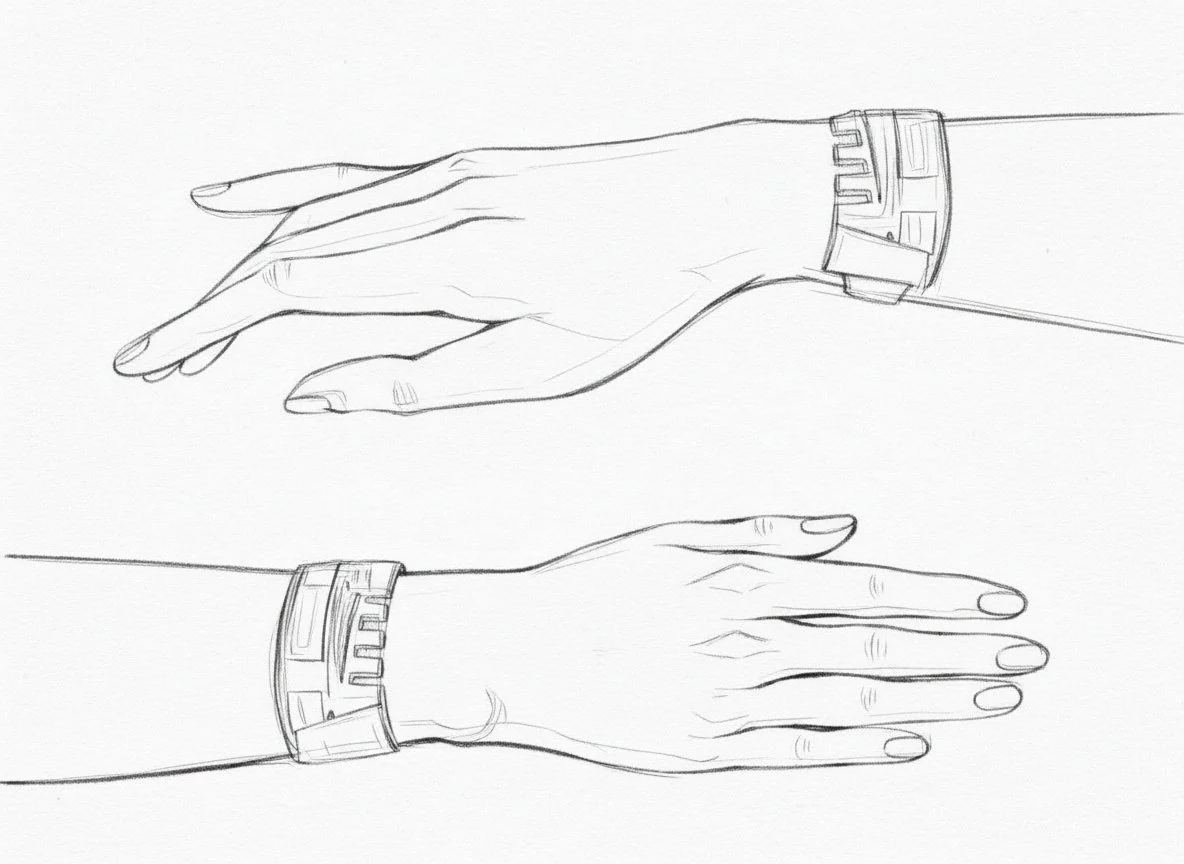
THE MODERN CUFF
A cuff bracelet defined by structure, continuity, and presence on the wrist.
The cuff bracelet is one of the most enduring forms in modern jewelry. Designed as a continuous object without a clasp, it balances simplicity with presence.
It sits at the intersection of everyday wear and statement: not defined by decoration, but by proportion and structure.
What defines A MODERN CUFF
The modern cuff is resolved as a complete object. Its curvature, weight, and opening are considered together, creating a sense of balance on the wrist.
Key characteristics:
Continuous form — uninterrupted and intentional
Structural integrity — maintains shape over time
Controlled proportion — balanced width, thickness, and opening
FIT AND WEAR
A cuff bracelet should sit securely without compression. It is typically worn just above the wrist bone, where it remains stable while allowing movement.
It should feel present, but never restrictive.
Materials and CONSTRUCTION
The quality of a cuff is defined by its material and finishing. Solid metals such as silver or gold provide weight and durability, while finishing defines how the piece is perceived.
Matte or brushed surfaces emphasize form over shine.
Why it matters
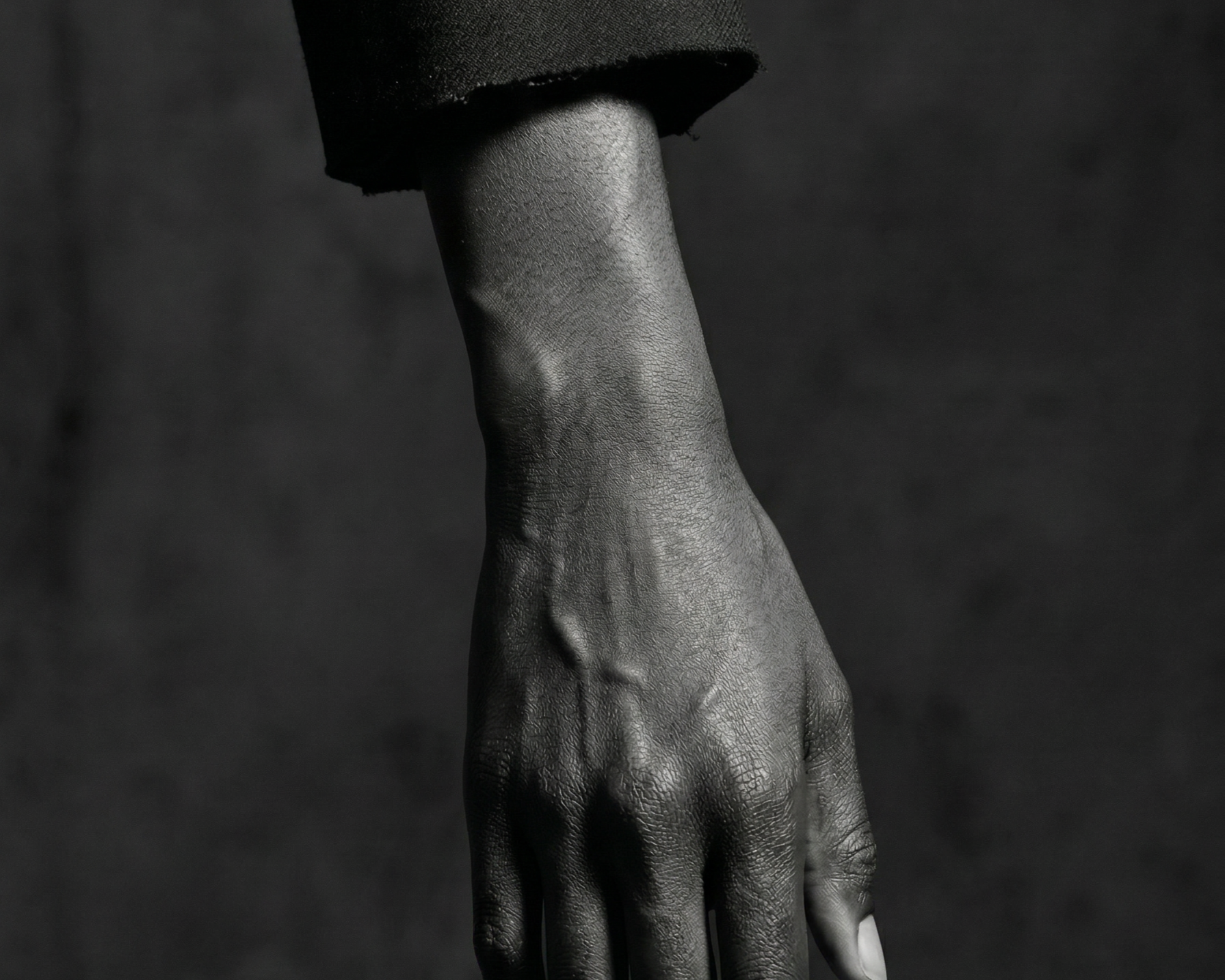
As preferences shift toward fewer, more intentional objects, the cuff bracelet has re-emerged as a central form.
It can function as both an everyday piece and a statement, depending on its scale and execution.
-
A: It should sit securely above the wrist bone without compressing the wrist, allowing natural movement without slipping.
-
A: Yes, provided the cuff is constructed with appropriate materials and structural integrity.
Metals such as silver, gold alloys, or more resistant materials like titanium are well suited for daily wear when properly finished.
The piece should maintain its shape over time without requiring repeated adjustment.
-
A: Cuffs should not be repeatedly adjusted, as this can weaken the metal over time.
-
The durability of a cuff bracelet depends on both the base material and its finishing.
Traditionally, solid metals such as sterling silver and gold are used for their balance of strength, weight, and workability.
However, more structural materials—such as titanium or stainless steel—offer increased resistance and precision, often associated with industrial design.
Finishing also plays a role. Treatments such as rhodium plating, brushing, or oxidation refine the surface, enhancing both durability and how the object is perceived.
Atelier CPII approaches the cuff as a sculptural object: defined by proportion, tension, and material precision.